Applying to KAUST - Your Complete Guide for Masters & Ph.D. Programs (Upcoming Admissions)
Admissions Overview & Key Requirements

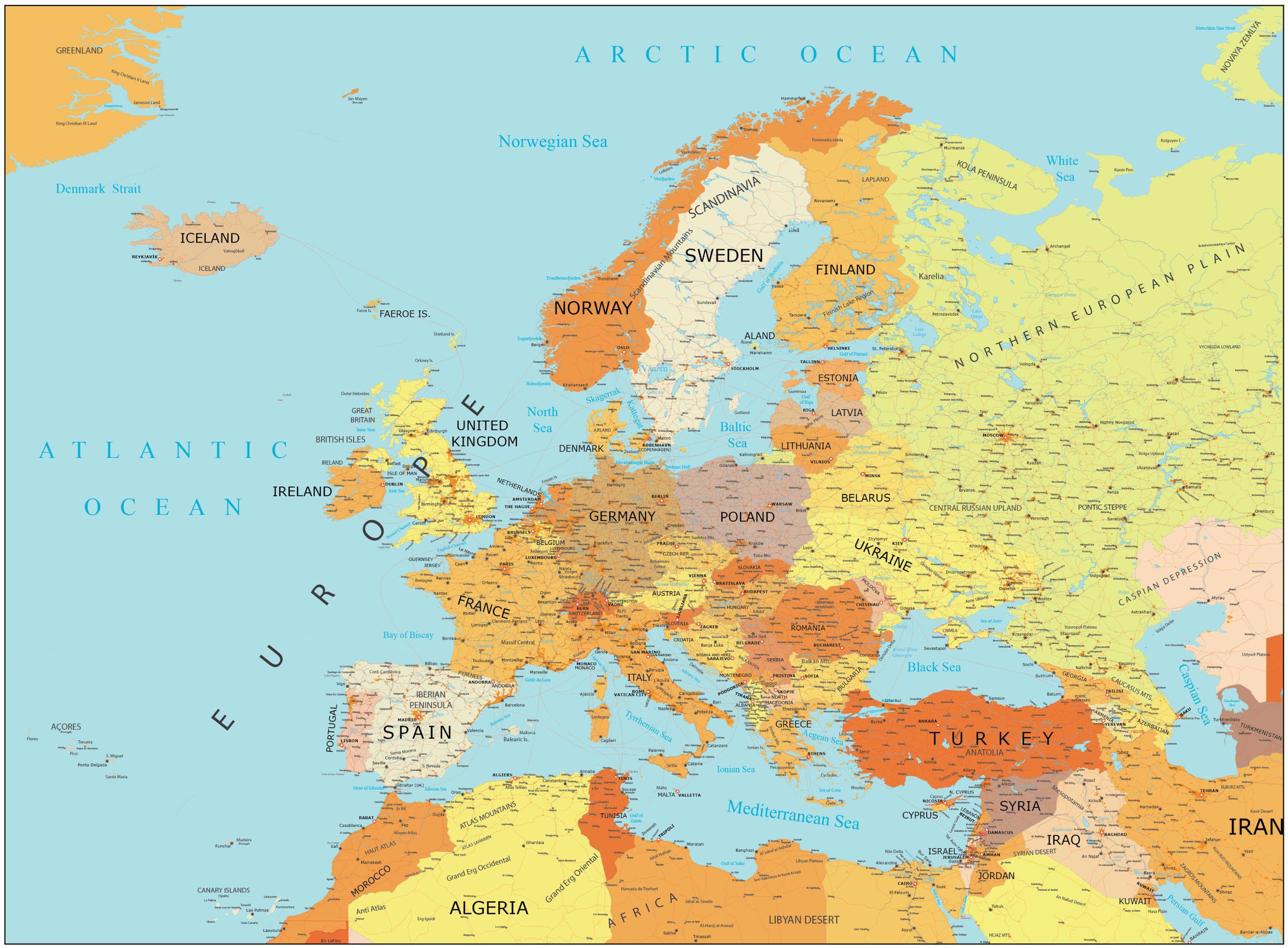
Map of Europe/ File: GIS Geography
The EF English Proficiency Index shows that Italy performs significantly worse compared to many of its European neighbours. While Italy ranks 36th globally, countries such as Hungary (15th), Romania (16th), and Greece (22nd) achieve noticeably better results.
The report suggests that one of the main reasons behind Italy’s low performance is the way English has traditionally been taught in schools. For years, English was not treated as a practical everyday skill, but rather as an academic subject focused heavily on grammar rules. As a result, students often lack confidence in speaking and real-life communication.
Another factor highlighted in the analysis is education funding. Italy is described as one of the lowest spenders on education in Europe, allocating around 3.8% of its GDP. In comparison, Germany spends 9.3%, while the United Kingdom allocates 11.3%. Experts argue that this gap has a direct impact on the quality of language education.
The article also points to cultural and institutional attitudes. English has not always been seen as a priority skill in Italy, and this attitude is reflected in both political discourse and the education system. Critics say this has slowed down the country’s adaptation to English as a global lingua franca.
Economic arguments are also raised in the report, with data suggesting a link between English proficiency and higher GDP per capita. Countries with stronger English skills tend to perform better economically, particularly in global trade and international business.
Education reforms and attempts at internationalisation have also faced resistance. One example mentioned is a legal case involving the Polytechnic University of Milan, which had attempted to introduce English-only courses to improve international competitiveness. The decision was later challenged in court, with judges ruling that it could disadvantage students who do not speak English. Following the ruling, the university stated that while English-medium teaching supports internationalisation, it should not come at the expense of equal access to education.
Overall, the report concludes that Italy’s weak English performance is not the result of a single factor, but a combination of teaching methods, limited investment in education, and resistance to change within institutions.
Share
Applying to KAUST - Your Complete Guide for Masters & Ph.D. Programs (Upcoming Admissions)
Admissions Overview & Key Requirements

An mRNA cancer vaccine may offer long-term protection
A small clinical trial suggests the treatment could help keep pancreatic cancer from returning

Registration Opens for SAF 2025: International STEAM Azerbaijan Festival Welcomes Global Youth
The International STEAM Azerbaijan Festival (SAF) has officially opened registration for its 2025 edition!

Young Leaders Union Conference 2025 in Paris (Fully Funded)
Join Global Changemakers in Paris! Fully Funded International Conference for Students, Professionals, and Social Leaders from All Nationalities and Fields

Yer yürəsinin daxili nüvəsində struktur dəyişiklikləri aşkar edilib
bu nəzəriyyənin doğru olmadığı məlum olub. Seismik dalğalar vasitəsilə aparılan tədqiqatda daxili nüvənin səthindəki dəyişikliklərə dair qeyri-adi məlumatlar əldə edilib.

Lester B Pearson Scholarship 2026 in Canada (Fully Funded)
Applications are now open for the Lester B Pearson Scholarship 2026 at the University of Toronto!