
Applying to KAUST - Your Complete Guide for Masters & Ph.D. Programs (Upcoming Admissions)
Admissions Overview & Key Requirements

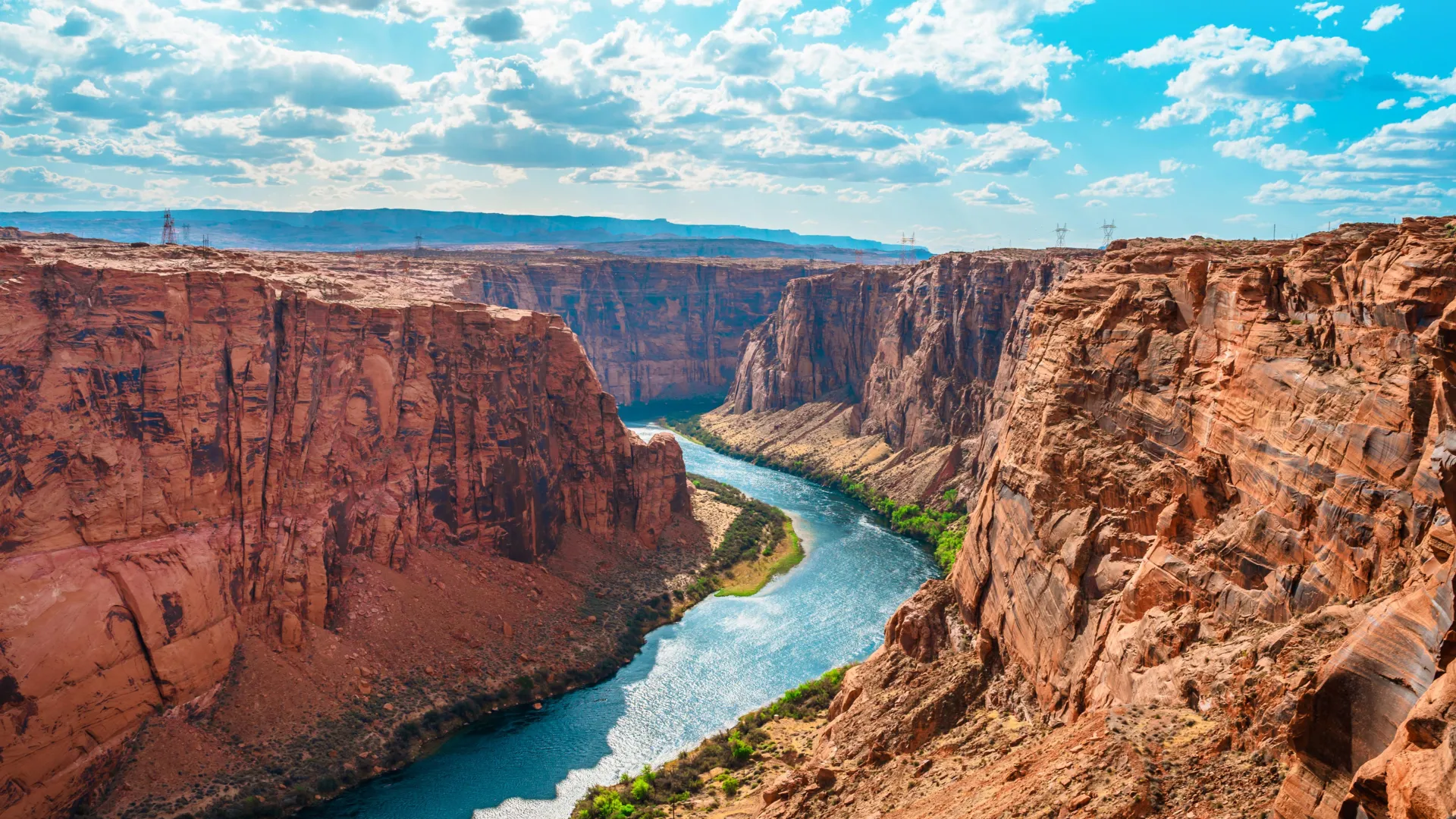
Landscape/ File: Sciencedaily
According to Scincedaily, since then, predictions based on snowpack levels have repeatedly overestimated how much water actually ends up flowing into rivers. Even in years with relatively good snowfall, river flows have been lower than expected, leaving scientists and water managers searching for answers.
So, where is the missing water going?
New research from the University of Washington suggests an unexpected factor: reduced spring rainfall.
The study shows that warmer and drier spring conditions account for nearly 70% of the gap between expected and actual river flows. When there is less rain in the spring, plants depend more on melting snow as their water source. As a result, less snowmelt reaches streams and rivers.
Dry weather also brings clearer skies, allowing more sunlight to reach the ground. This encourages plant growth and increases evaporation from the soil, both of which further decrease the amount of water that flows into rivers.
Researchers examined several possible explanations for the missing water. One early theory suggested that more snow was turning directly into vapor through a process called sublimation.
However, this process was found to explain only about 10% of the loss.
Instead, the main factor is how plants respond to changing spring conditions. Vegetation—from grasses to trees—acts like a natural pump, absorbing water from the soil and releasing it into the atmosphere.
Scientists found that spring brings rapid environmental changes, shifting quickly from deep snow cover to active plant growth. Without enough spring rain, plants rely heavily on snowmelt, effectively drawing water away before it can reach rivers.
Recent studies also indicate that plants can continue using large amounts of water even during hot and dry periods, pulling from both snowmelt and groundwater.
To better understand this process, researchers studied 26 headwater regions across the Upper Colorado River Basin. They analyzed decades of data, including precipitation and streamflow records dating back to 1964, and estimated how much water vegetation consumes.
Their findings were consistent: when spring rainfall decreases, river flow also declines.
The effect is especially strong in lower-elevation areas, where snow melts earlier. This gives plants more time to grow and absorb water before it can enter streams.
These findings present a major challenge for water management.
Current forecasting methods rely heavily on snowpack measurements taken in early April. However, by that time, spring weather conditions—now known to be crucial—have not fully developed yet.
This means that accurately predicting water availability requires better understanding and forecasting of spring rainfall patterns.
Recent data suggests that this issue is part of a broader and growing problem.
Since 1999, precipitation in the Colorado River Basin has dropped by about 7%, and in some years, only half of the expected snowmelt actually reaches rivers.
At the same time, rising temperatures are causing snow to melt earlier and increasing water loss through evaporation and plant use. In some cases, snow disappears weeks earlier than usual, reducing water availability later in the year.
Dry soils and declining groundwater levels also play a role. Parched ground can absorb significant amounts of snowmelt before it reaches streams, while groundwater reserves have been shrinking in recent decades.
Together, these factors are weakening the once reliable connection between snowpack and river flow.
As the long-lasting Millennium drought continues, these findings become increasingly important. Accurately predicting water supply, managing reservoirs, and planning for the future all depend on understanding how much water will actually make it into rivers.
Share
Applying to KAUST - Your Complete Guide for Masters & Ph.D. Programs (Upcoming Admissions)
Admissions Overview & Key Requirements

An mRNA cancer vaccine may offer long-term protection
A small clinical trial suggests the treatment could help keep pancreatic cancer from returning

Registration Opens for SAF 2025: International STEAM Azerbaijan Festival Welcomes Global Youth
The International STEAM Azerbaijan Festival (SAF) has officially opened registration for its 2025 edition!

Young Leaders Union Conference 2025 in Paris (Fully Funded)
Join Global Changemakers in Paris! Fully Funded International Conference for Students, Professionals, and Social Leaders from All Nationalities and Fields

Yer yürəsinin daxili nüvəsində struktur dəyişiklikləri aşkar edilib
bu nəzəriyyənin doğru olmadığı məlum olub. Seismik dalğalar vasitəsilə aparılan tədqiqatda daxili nüvənin səthindəki dəyişikliklərə dair qeyri-adi məlumatlar əldə edilib.

Lester B Pearson Scholarship 2026 in Canada (Fully Funded)
Applications are now open for the Lester B Pearson Scholarship 2026 at the University of Toronto!