
Applying to KAUST - Your Complete Guide for Masters & Ph.D. Programs (Upcoming Admissions)
Admissions Overview & Key Requirements

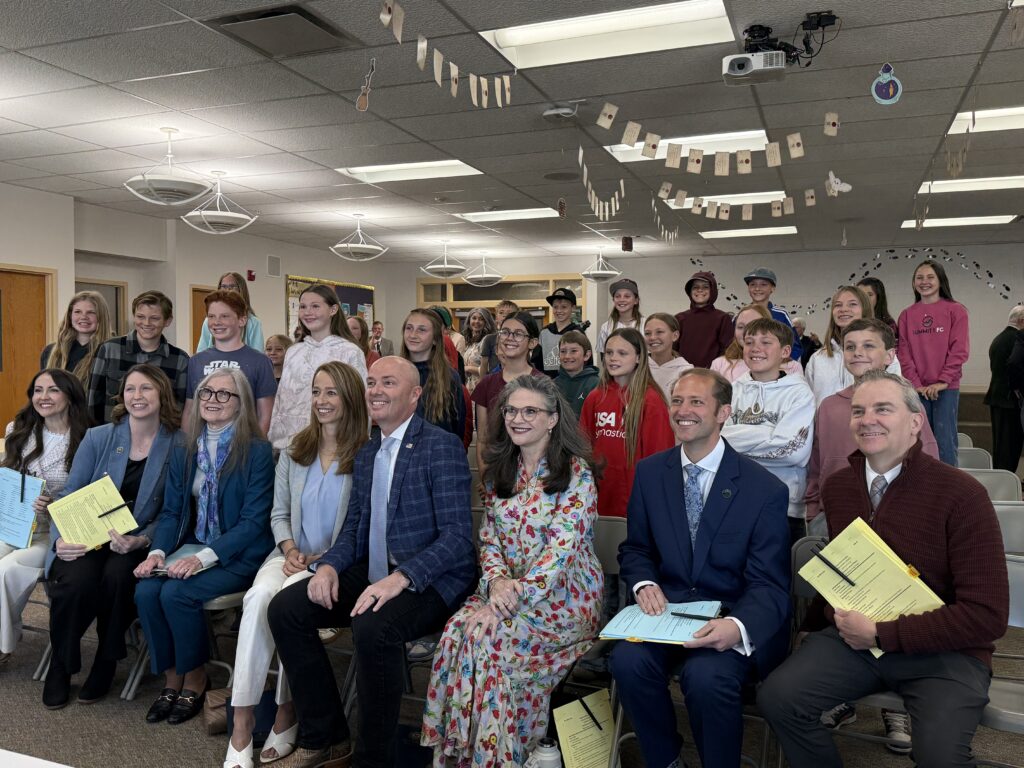
People/ File: Utah News Dispatch
According to Utah News Dispatch, Utah leaders, led by Spencer Cox, focused their recent K–12 education efforts on getting students “back to basics.” Their goal is to encourage more face-to-face interaction among children and increase the number of books students read, instead of spending time on phones and social media.
At a ceremonial event in an elementary school library, the governor and first lady Abby Cox signed several education bills aimed at reducing screen time and improving literacy. Abby Cox emphasized that as social media use has grown over the past decade, reading skills have declined, suggesting a connection between the two trends.
One of the key measures is a “bell-to-bell” cellphone ban in schools. This policy generally prohibits phone use throughout the school day, although individual schools can adjust the rules. Another major initiative includes a $16 million investment to improve reading skills for students in kindergarten through third grade, especially since nearly half of third graders are not reading at grade level.
Lawmakers also introduced a required digital skills course for seventh and eighth graders. According to Jordan Teuscher, the course was created in response to parents’ concerns about their children’s ability to navigate online spaces safely. It will teach both the risks and benefits of technology, helping students find a healthy balance between digital and real-life experiences.
In addition, the state approved a 4.7% tax on social media companies that collect user data for targeted advertising. The revenue from this tax will fund youth programs such as sports, volunteer opportunities, and mental health services. Leaders argue that these companies should contribute to addressing the negative effects their platforms may have on young people.
Another law addresses the use of artificial intelligence in classrooms. Sponsored by Ariel Defay, it limits technology use in early grades to help students build strong foundational skills, while gradually introducing more technology in higher grades.
Finally, Utah is also working to identify and support students with dyslexia earlier by funding screenings and partnering with University of Utah to create a statewide intervention plan.
Overall, these new policies are designed to reduce students’ dependence on technology while strengthening essential academic skills and promoting healthier development.
Share
Applying to KAUST - Your Complete Guide for Masters & Ph.D. Programs (Upcoming Admissions)
Admissions Overview & Key Requirements

An mRNA cancer vaccine may offer long-term protection
A small clinical trial suggests the treatment could help keep pancreatic cancer from returning

Registration Opens for SAF 2025: International STEAM Azerbaijan Festival Welcomes Global Youth
The International STEAM Azerbaijan Festival (SAF) has officially opened registration for its 2025 edition!

Young Leaders Union Conference 2025 in Paris (Fully Funded)
Join Global Changemakers in Paris! Fully Funded International Conference for Students, Professionals, and Social Leaders from All Nationalities and Fields

Yer yürəsinin daxili nüvəsində struktur dəyişiklikləri aşkar edilib
bu nəzəriyyənin doğru olmadığı məlum olub. Seismik dalğalar vasitəsilə aparılan tədqiqatda daxili nüvənin səthindəki dəyişikliklərə dair qeyri-adi məlumatlar əldə edilib.

Lester B Pearson Scholarship 2026 in Canada (Fully Funded)
Applications are now open for the Lester B Pearson Scholarship 2026 at the University of Toronto!