Applying to KAUST - Your Complete Guide for Masters & Ph.D. Programs (Upcoming Admissions)
Admissions Overview & Key Requirements

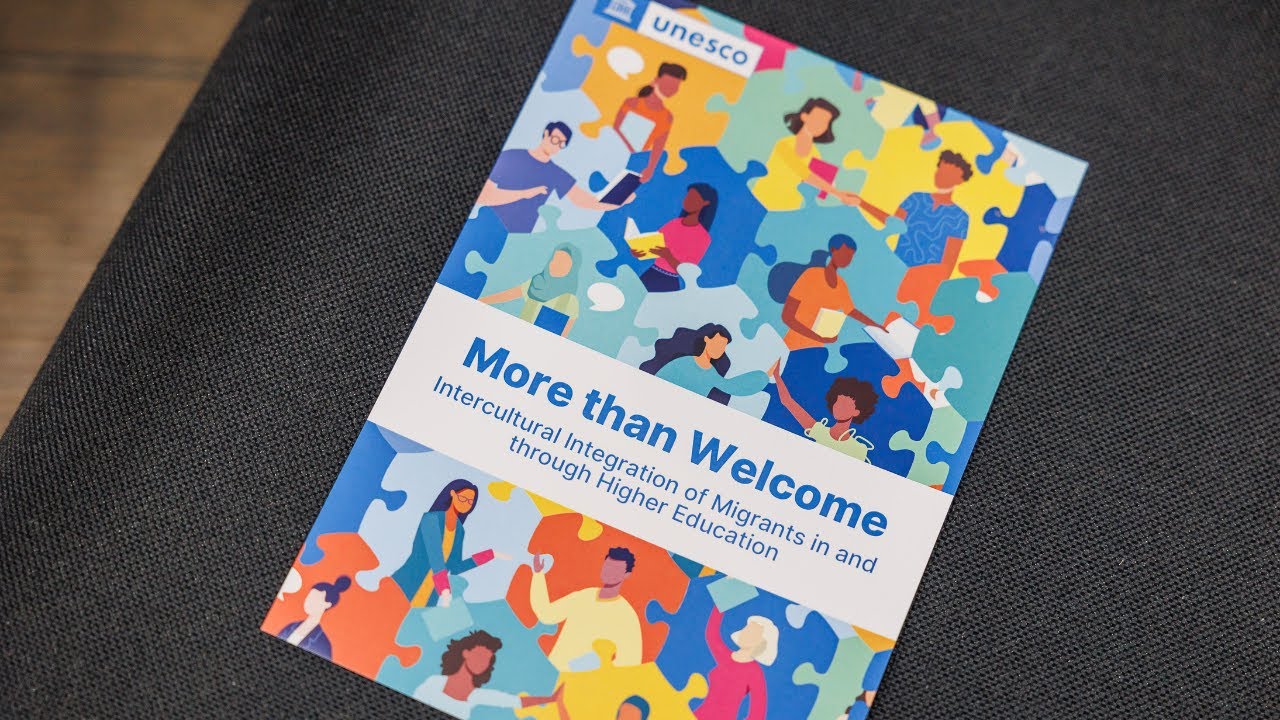
Higher education institutions are more than centers of knowledge and skills—they are spaces where migrants and host communities can connect, cultural dialogue can flourish, and students can learn to live and work alongside diverse groups. However, intercultural integration is too often approached as a one-way process, placing the burden of adaptation primarily on migrants. In reality, successful integration requires participation, openness, and learning from all parties, benefiting society as a whole.
To address this gap, UNESCO-supported publication “More than Welcome” offers a strategic and practical framework for intercultural integration in and through higher education. The publication frames integration not as individual adaptation, but as a multidirectional process in which everyone learns and contributes. It also emphasizes the critical role of institutions in creating environments that foster belonging, participation, and agency.
The framework is built around five key principles, placing intercultural competence at the heart of university practices in governance, teaching and learning, student support, staff development, and community engagement. It provides concrete entry points for higher education leaders and practitioners to assess current approaches, identify gaps, and create inclusive, fair, and collaborative environments.
The publication was presented on 21 January 2026 at the inaugural NAFSA – Association of International Educators Global Summit in Tangier, Morocco. More than 200 higher education leaders from around the world gathered to discuss how the framework can be applied at institutional, system, and cross-sector levels. The summit highlighted opportunities to embed intercultural integration into leadership, strategic planning, and daily practice across higher education systems.
The framework also offers practical guidance for universities: it helps assess existing approaches, identify gaps, strengthen student support and staff development, and enhance collaboration with communities. By focusing on integration as a shared, multidirectional process, “More than Welcome” moves beyond one-sided adaptation models and contributes to more inclusive and resilient societies.
Higher education institutions are increasingly recognized not just as centers of knowledge but as strategic actors in building open, tolerant, and inclusive communities. “More than Welcome” provides a concrete roadmap to help universities realize this role.
Share
Applying to KAUST - Your Complete Guide for Masters & Ph.D. Programs (Upcoming Admissions)
Admissions Overview & Key Requirements

An mRNA cancer vaccine may offer long-term protection
A small clinical trial suggests the treatment could help keep pancreatic cancer from returning

Registration Opens for SAF 2025: International STEAM Azerbaijan Festival Welcomes Global Youth
The International STEAM Azerbaijan Festival (SAF) has officially opened registration for its 2025 edition!
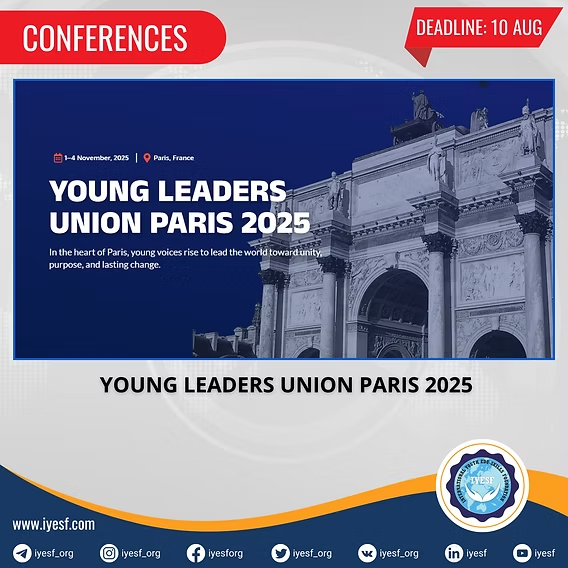
Young Leaders Union Conference 2025 in Paris (Fully Funded)
Join Global Changemakers in Paris! Fully Funded International Conference for Students, Professionals, and Social Leaders from All Nationalities and Fields

Yer yürəsinin daxili nüvəsində struktur dəyişiklikləri aşkar edilib
bu nəzəriyyənin doğru olmadığı məlum olub. Seismik dalğalar vasitəsilə aparılan tədqiqatda daxili nüvənin səthindəki dəyişikliklərə dair qeyri-adi məlumatlar əldə edilib.

Lester B Pearson Scholarship 2026 in Canada (Fully Funded)
Applications are now open for the Lester B Pearson Scholarship 2026 at the University of Toronto!