
Applying to KAUST - Your Complete Guide for Masters & Ph.D. Programs (Upcoming Admissions)
Admissions Overview & Key Requirements

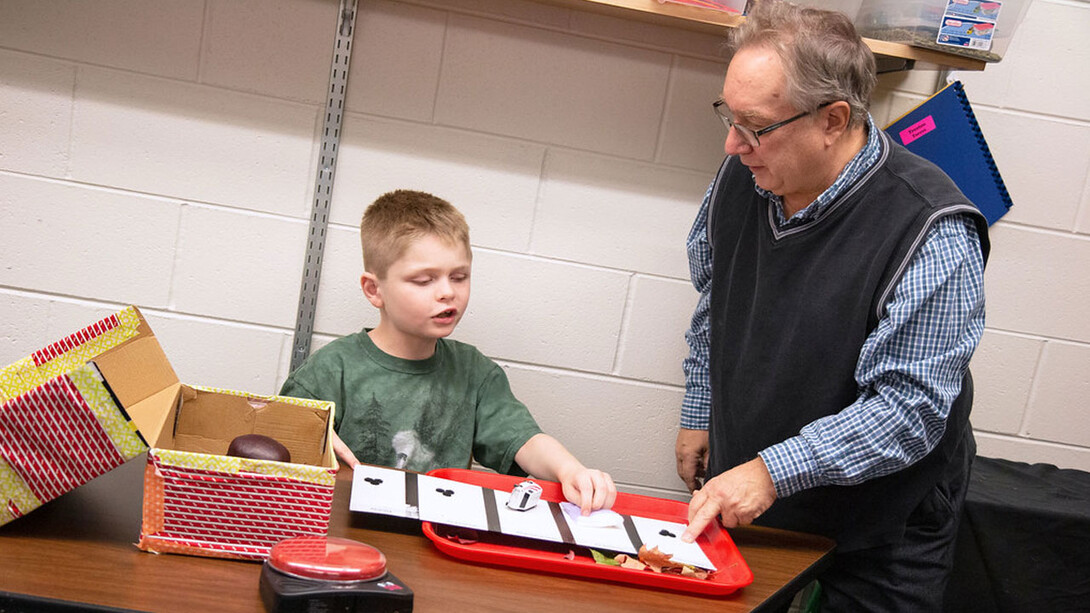
People/ File: Nebraska today
According to Nebraska today, with the launch of a new database and website created by Kindred Media, researchers with the Nebraska Deafblind Project have made data collection much more efficient, overcoming many of the challenges they faced in the past.
Deafblindness refers to a combined loss of vision and hearing, which makes communication, language development, and interaction with the environment more complex. It can vary widely in severity and may be present from birth or develop later in life. Because both senses are affected, individuals often need personalized support to navigate daily life, education, and social connections.
The Nebraska Deafblind Project offers statewide support to students with both vision and hearing loss, as well as to their families and educational teams. Funded by the U.S. Department of Education, the program provides technical assistance, professional development, and maintains a statewide registry of deafblind students.
The newly developed system gives users secure, password-protected accounts where they can view up-to-date student information on a dashboard. It also allows users to add or update student details instantly.
Mackenzie Savaiano, an associate professor of practice in the Department of Special Education and Communication Disorders, has been leading the project since 2023.
She explained that deafblind individuals represent a small and highly specialized population, which makes it difficult for parents, early intervention providers, and teachers to find appropriate resources.
The system includes administrative tools that allow Savaiano to generate reports for the National Center on Deafblindness and organize cases by cause, helping connect families and educators with relevant support.
This new digital platform replaces the previous paper-based system, improving accuracy and automatically alerting administrators when updates are needed-such as when a student leaves the program or a teacher changes locations.
In the past, student data was collected through forms filled out by parents and educators, then manually entered into spreadsheets, printed, and stored in locked cabinets.
Savaiano noted that while the project has always done well in supporting educators, support for families has sometimes been limited due to inefficiencies in tracking student data. The new system has significantly improved that process.
Another major improvement is the annual child count required by the U.S. Department of Education. Previously, deafblind students with multiple disabilities could be counted in more than one category. The new database allows for a more accurate count specifically for deafblind students.
Now in its first year, the system has been tested in selected school districts, and early results have been positive.
Savaiano said she now feels more confident reaching out to families because the information is current. She expects that by spring, the database will be fully updated, allowing her to focus more on supporting parents and families moving forward.
Share
Applying to KAUST - Your Complete Guide for Masters & Ph.D. Programs (Upcoming Admissions)
Admissions Overview & Key Requirements

An mRNA cancer vaccine may offer long-term protection
A small clinical trial suggests the treatment could help keep pancreatic cancer from returning

Registration Opens for SAF 2025: International STEAM Azerbaijan Festival Welcomes Global Youth
The International STEAM Azerbaijan Festival (SAF) has officially opened registration for its 2025 edition!

Young Leaders Union Conference 2025 in Paris (Fully Funded)
Join Global Changemakers in Paris! Fully Funded International Conference for Students, Professionals, and Social Leaders from All Nationalities and Fields

Yer yürəsinin daxili nüvəsində struktur dəyişiklikləri aşkar edilib
bu nəzəriyyənin doğru olmadığı məlum olub. Seismik dalğalar vasitəsilə aparılan tədqiqatda daxili nüvənin səthindəki dəyişikliklərə dair qeyri-adi məlumatlar əldə edilib.

Lester B Pearson Scholarship 2026 in Canada (Fully Funded)
Applications are now open for the Lester B Pearson Scholarship 2026 at the University of Toronto!