Applying to KAUST - Your Complete Guide for Masters & Ph.D. Programs (Upcoming Admissions)
Admissions Overview & Key Requirements

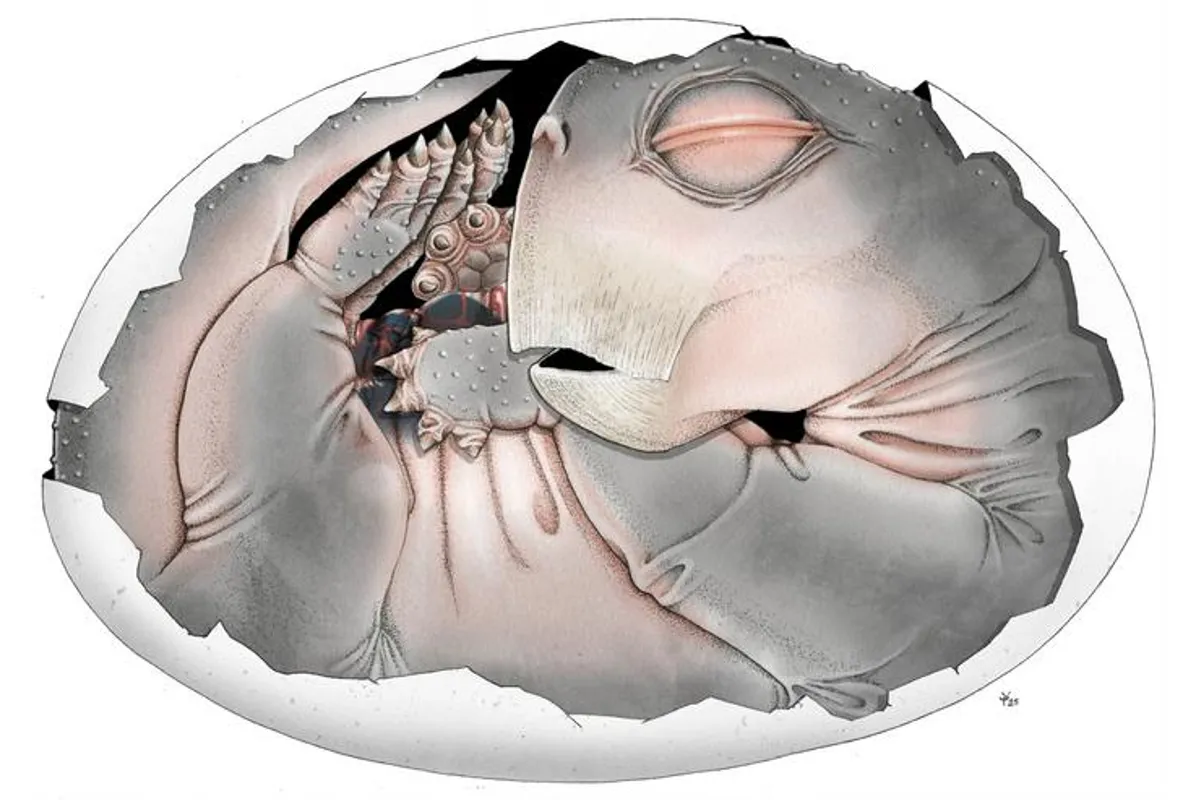
Reconstruction of Lystrosaurus. Image from Julien Benoit and Sophie Vrard
One of the greatest survival tales in Earth's history is being revealed by a stunning new finding that also provides an answer to a long-standing scientific mystery. The resilient, plant-eating mammal ancestor Lystrosaurus gained notoriety following the End-Permian Mass Extinction, which occurred about 252 million years ago and was the most catastrophic extinction event in the history of our planet.
The environment during that time was characterized by severe ecological instability, including thermal extremes and long-term droughts. Despite that, Lystrosaurus managed to survive and flourish while innumerable other species died.
According to the research by PLOS ONE, an egg, dating back approximately 250 million years, had an embryo of Lystrosaurus. This amazing discovery proves that ancestors of mammals laid eggs.
The study suggests that the eggs, led by Lystrosaurus, were quite large. Thanks to their size, the embryos were able to develop on their own, not requiring being fed by parents.
These young animals would have been able to quickly reach reproductive maturity, feed themselves, and protect themselves from any predators. To put it another way, Lystrosaurus flourished because of its rapid life cycle and early reproduction.
This finding matters significantly because researchers now have a better understanding of how the species adapted to extreme environmental stress. It improves the ability to forecast how contemporary animals might react to habitat disruption and climate change.
Share
Applying to KAUST - Your Complete Guide for Masters & Ph.D. Programs (Upcoming Admissions)
Admissions Overview & Key Requirements

An mRNA cancer vaccine may offer long-term protection
A small clinical trial suggests the treatment could help keep pancreatic cancer from returning

Registration Opens for SAF 2025: International STEAM Azerbaijan Festival Welcomes Global Youth
The International STEAM Azerbaijan Festival (SAF) has officially opened registration for its 2025 edition!
Young Leaders Union Conference 2025 in Paris (Fully Funded)
Join Global Changemakers in Paris! Fully Funded International Conference for Students, Professionals, and Social Leaders from All Nationalities and Fields

Yer yürəsinin daxili nüvəsində struktur dəyişiklikləri aşkar edilib
bu nəzəriyyənin doğru olmadığı məlum olub. Seismik dalğalar vasitəsilə aparılan tədqiqatda daxili nüvənin səthindəki dəyişikliklərə dair qeyri-adi məlumatlar əldə edilib.

Lester B Pearson Scholarship 2026 in Canada (Fully Funded)
Applications are now open for the Lester B Pearson Scholarship 2026 at the University of Toronto!