Applying to KAUST - Your Complete Guide for Masters & Ph.D. Programs (Upcoming Admissions)
Admissions Overview & Key Requirements


According to China Daily, the “10 Musts” require schools to obtain proper food operation permits, adhere to public welfare principles in canteen management, and establish a clear food safety responsibility system, with the school principal designated as the primary accountable person.
The rules also mandate regular health checks and training for canteen staff. Strict procedures must be followed for the procurement and inspection of food ingredients. Additionally, the preparation of high-risk foods such as cold dishes and raw foods is prohibited in primary and secondary schools as well as kindergartens.
Schools are further required to implement a meal accompaniment system, ensuring that at least one school official eats with students at every meal. In cases of food safety incidents or suspected foodborne illness, schools must take immediate action, promptly report to relevant authorities, and fully cooperate with investigations. Concealing, delaying, or falsifying reports is strictly forbidden.
Under the “10 Don’ts,” unqualified personnel are prohibited from handling ready-to-eat food. The use of expired or substandard ingredients, improper handling of raw and cooked foods, and any attempts to conceal or delay reporting food safety incidents are also banned.
Canteen staff are strictly forbidden from using banned food additives, toxic or harmful substances, spoiled or expired ingredients, or any materials that fail to meet food safety standards. The ministry encourages schools to display the “10 Musts” in administrative areas of canteens and the “10 Don’ts” in workspaces to raise awareness among staff and management.
Share
Applying to KAUST - Your Complete Guide for Masters & Ph.D. Programs (Upcoming Admissions)
Admissions Overview & Key Requirements

An mRNA cancer vaccine may offer long-term protection
A small clinical trial suggests the treatment could help keep pancreatic cancer from returning

Registration Opens for SAF 2025: International STEAM Azerbaijan Festival Welcomes Global Youth
The International STEAM Azerbaijan Festival (SAF) has officially opened registration for its 2025 edition!
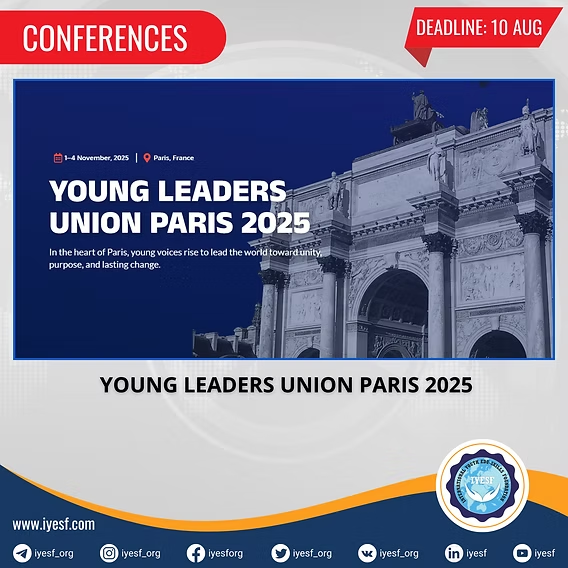
Young Leaders Union Conference 2025 in Paris (Fully Funded)
Join Global Changemakers in Paris! Fully Funded International Conference for Students, Professionals, and Social Leaders from All Nationalities and Fields

Yer yürəsinin daxili nüvəsində struktur dəyişiklikləri aşkar edilib
bu nəzəriyyənin doğru olmadığı məlum olub. Seismik dalğalar vasitəsilə aparılan tədqiqatda daxili nüvənin səthindəki dəyişikliklərə dair qeyri-adi məlumatlar əldə edilib.

Lester B Pearson Scholarship 2026 in Canada (Fully Funded)
Applications are now open for the Lester B Pearson Scholarship 2026 at the University of Toronto!