
Applying to KAUST - Your Complete Guide for Masters & Ph.D. Programs (Upcoming Admissions)
Admissions Overview & Key Requirements

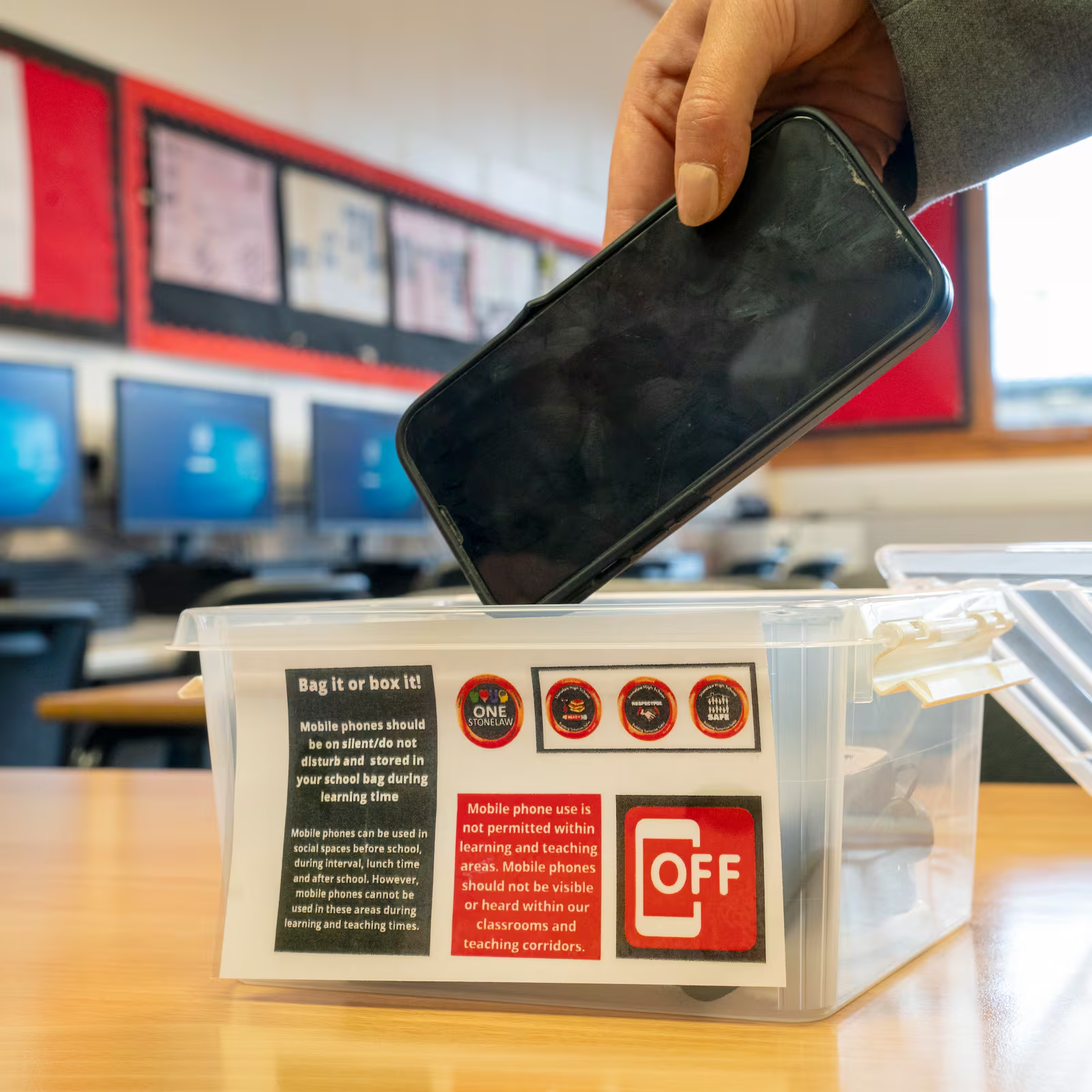
Edinburgh's secondary schools appear headed for a sweeping crackdown on mobile phones after a public consultation revealed levels of support that rarely emerge from any civic exercise. With nearly 14,000 people weighing in, the message from classrooms and kitchen tables alike was the same: get the devices out of children's hands during the school day.
The results left little room for ambiguity. Virtually all teaching staff backed some form of restriction, and parents were not far behind. The city council says the findings will shape an official policy it plans to finalise before the year is out.
The groundwork was laid last year when two Edinburgh secondaries trialled a system using magnetic pouches — sealed bags that keep phones locked away until the end of the day. The approach is already familiar from the music world, where artists tired of audiences staring at screens have used the same technology to reclaim the atmosphere at live shows. For Edinburgh's educators, the appeal was similar: fewer distractions, more human connection.
One school did not wait for the consultation to conclude. James Gillespie's High in Marchmont declared itself phone-free some time ago, and its headteacher says the shift has been quietly transformative. Pupils are talking to each other in corridors again. Teachers have been freed from the daily grind of confiscation disputes. The school's view is that pouches would simply reinforce what good habits have already achieved.
Student opinion, predictably, was more nuanced. A slim majority supported restrictions of some kind, but many drew a firm line at breaks and lunchtime, arguing that personal emergencies and family contact cannot simply be paused for six hours. One pupil made a pointed observation that cut through the debate: the iPads handed out by the school as learning tools are, if anything, a greater temptation than personal phones, offering the same games, social feeds and distractions behind a veneer of educational purpose.
Those who favour a full-day ban — the stricter end of the spectrum — found strong backing among adults but minimal enthusiasm among the students themselves. Only a handful of young people supported that position, a gap in perspective the council will need to navigate carefully as it moves toward a binding decision.
Particular attention will be paid to pupils whose circumstances make a blanket ban complicated — those managing health conditions or carrying responsibilities at home that require them to stay reachable during the day.
The financial cost of rolling out the pouch system across the city has been put at close to half a million pounds annually, a figure the council will have to weigh against the projected benefits to learning and staff wellbeing.
Elsewhere in Scotland, some schools have taken even more drastic steps. One Inverness school has effectively made smartphones useless within its walls by cutting off the signal inside the building altogether, with internet access reserved exclusively for staff.
Share
Applying to KAUST - Your Complete Guide for Masters & Ph.D. Programs (Upcoming Admissions)
Admissions Overview & Key Requirements

An mRNA cancer vaccine may offer long-term protection
A small clinical trial suggests the treatment could help keep pancreatic cancer from returning

Registration Opens for SAF 2025: International STEAM Azerbaijan Festival Welcomes Global Youth
The International STEAM Azerbaijan Festival (SAF) has officially opened registration for its 2025 edition!

Young Leaders Union Conference 2025 in Paris (Fully Funded)
Join Global Changemakers in Paris! Fully Funded International Conference for Students, Professionals, and Social Leaders from All Nationalities and Fields

Yer yürəsinin daxili nüvəsində struktur dəyişiklikləri aşkar edilib
bu nəzəriyyənin doğru olmadığı məlum olub. Seismik dalğalar vasitəsilə aparılan tədqiqatda daxili nüvənin səthindəki dəyişikliklərə dair qeyri-adi məlumatlar əldə edilib.

Lester B Pearson Scholarship 2026 in Canada (Fully Funded)
Applications are now open for the Lester B Pearson Scholarship 2026 at the University of Toronto!