Applying to KAUST - Your Complete Guide for Masters & Ph.D. Programs (Upcoming Admissions)
Admissions Overview & Key Requirements

File: The Manpower
The 2016 Brexit referendum in the United Kingdom brought significant shifts to the European higher education landscape, leading to a noticeable increase in interest in European countries other than the UK as primary destinations for university studies.
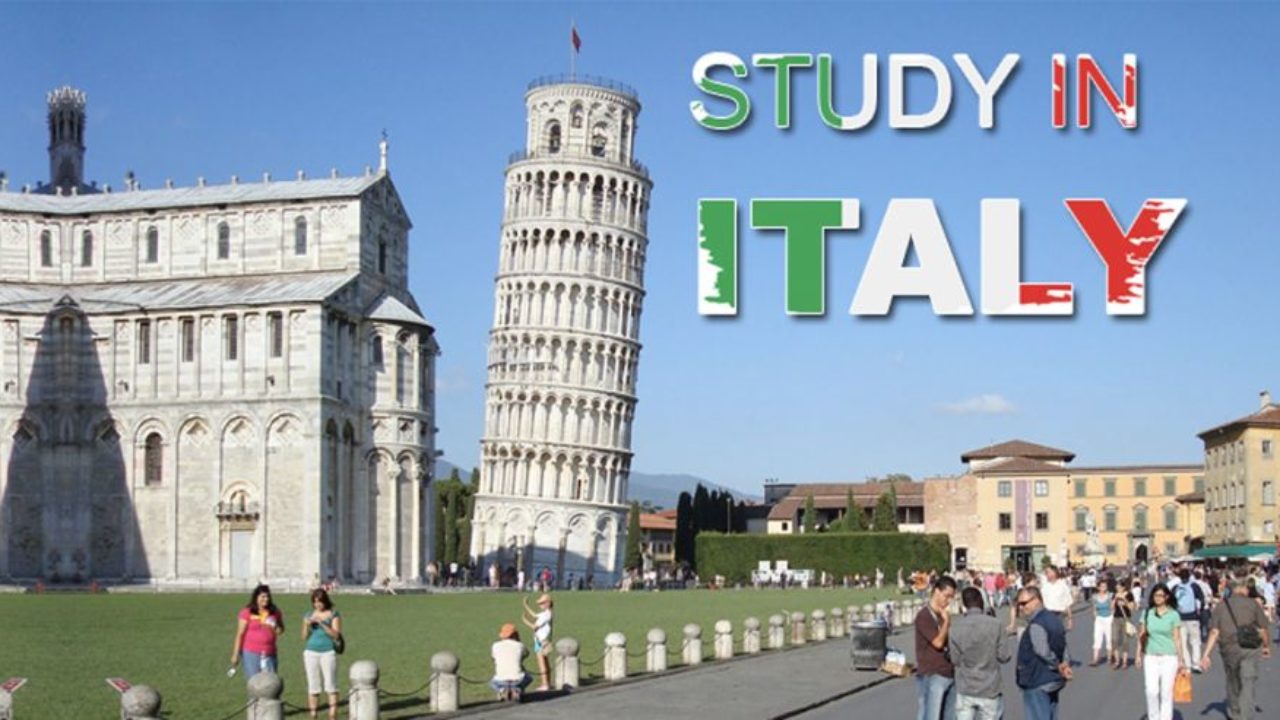
Countries such as Germany and the Netherlands are now among the leaders in attracting international undergraduate applications. At the same time, Italy has also experienced a strong rise in popularity and has expanded its range of English-taught undergraduate programmes. These programmes cover a wide variety of fields, from traditionally strong disciplines such as architecture, fashion, art and design to STEM subjects, social sciences, and medicine.
Italy is also home to the world’s oldest university, the University of Bologna, and offers a broad mix of public and private higher education institutions. In the private sector, specialised creative institutions such as Polimoda, NABA, and Istituto Marangoni Milano provide bachelor’s and master’s degrees in areas including fashion, interior design, architecture, and visual arts.
In addition, compared to countries like the Netherlands, Italy remains relatively affordable for international students in terms of accommodation, largely due to more balanced international student numbers. Its central location in Europe and well-developed transport network also make it highly accessible and well connected to other European countries.
Private universities in Italy
For students interested in economics and business, Bocconi University is one of the most prominent institutions, consistently ranked among the top business schools worldwide. The university has significantly expanded its English-taught programmes and international student intake. It now offers degrees in fields such as law, international politics, economics, management for arts, social sciences, and even AI and computer science.
Italy has also become an increasingly attractive destination for medical education, supported by its strong public healthcare system. There are five private medical schools in the country that admit international students. Tuition fees at private institutions such as Vita-Salute San Raffaele and Humanitas University in Milan typically range from €7,000 to €25,000 per year. While this is relatively costly, it remains more affordable compared to medical education in the United States and the United Kingdom.
Public universities
Many Italian public universities, including the University of Pavia, the University of Bologna, and Sapienza University of Rome, now offer English-taught undergraduate programmes. In addition, twelve public medical schools provide places for international students.
Tuition fees for non-EU students are generally much lower than in many other countries and are calculated based on income bands. This makes Italian public universities particularly attractive for students from middle- and lower-income backgrounds, especially those seeking English-taught degrees aligned with labour market demand in areas such as IT and medicine.
Annual tuition fees at public universities typically range from €1,000 to €4,000 for international students, depending on family income, which is assessed using the Indicator of Equivalent Economic Situation (ISEE).
How to apply to university in Italy
1. Admission requirements
Each university and programme in Italy sets its own admission criteria. However, applicants generally need the following:
A high school diploma equivalent to the Italian maturità, which corresponds to 12 years of schooling.
An entrance examination for certain programmes, particularly in fields such as medicine, engineering, and architecture. These may include exams like IMAT for medicine and TOLC-I or TOLC-E for STEM and economics-related degrees. Some universities also accept the SAT as an alternative entry qualification. For example, the University of Pavia offers a bachelor’s in Artificial Intelligence that may accept SAT scores. Competitive programmes such as those at Bocconi University often require SAT scores above 1400 or performance in the university’s own admission test.
Proof of English language proficiency is also required for English-taught programmes, usually through TOEFL or IELTS at approximately B2 level under the CEFR. This requirement may be waived for students who have completed education in English-medium schools.
2. Application process
Applications are generally submitted online through individual university portals, although many international applicants also use the centralised platform Universitaly, which functions similarly to UCAS in the UK or Studielink in the Netherlands.
Applicants must first create an account, then complete an online application form with personal details, academic history, and programme choice. They are also required to upload supporting documents such as a high school diploma or enrolment certificate (for final-year students), a CV, academic transcripts, proof of language proficiency, a motivation letter and/or essay, reference letters if required, and a portfolio for creative programmes such as design or architecture.
Application deadlines for international students typically fall between April and July. However, some universities offer multiple admission rounds, including early deadlines in September, regular deadlines in January, and spring sessions in May.
Student visa requirements
Students from EU countries do not need a visa to study in Italy. Non-EU students, however, must apply for a student visa through the Italian consulate in their home country. Required documents usually include an admission letter from an Italian university, a valid passport, proof of financial means (around €8,800 per year for living expenses), health insurance, and accommodation confirmation.
Non-EU students may also need to validate their previous education in Italy and obtain a Dichiarazione di Valore (Declaration of Value), issued by Italian diplomatic missions. This process can be time-consuming and may affect visa processing and arrival timelines.
It is therefore recommended that students, counsellors, and parents carefully plan the application timeline in advance, ensuring all required documents are prepared, translated, and certified where necessary.
Funding and scholarships
Despite already relatively low tuition fees, Italian universities also offer a range of merit-based and need-based scholarships. These may fully or partially cover tuition fees, accommodation, and living costs, and are usually awarded annually.
Parental involvement is often important in preparing financial documentation for income-based assessments and ensuring proper certification and translation of required documents.
Source: Times Higher Education
Share
Applying to KAUST - Your Complete Guide for Masters & Ph.D. Programs (Upcoming Admissions)
Admissions Overview & Key Requirements

An mRNA cancer vaccine may offer long-term protection
A small clinical trial suggests the treatment could help keep pancreatic cancer from returning

Registration Opens for SAF 2025: International STEAM Azerbaijan Festival Welcomes Global Youth
The International STEAM Azerbaijan Festival (SAF) has officially opened registration for its 2025 edition!
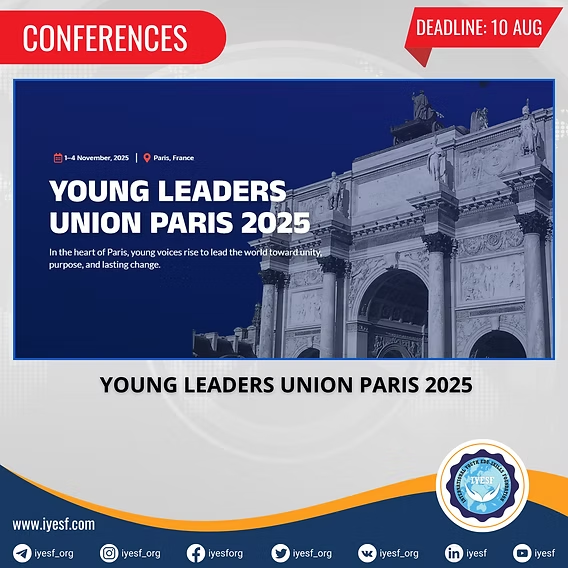
Young Leaders Union Conference 2025 in Paris (Fully Funded)
Join Global Changemakers in Paris! Fully Funded International Conference for Students, Professionals, and Social Leaders from All Nationalities and Fields

Yer yürəsinin daxili nüvəsində struktur dəyişiklikləri aşkar edilib
bu nəzəriyyənin doğru olmadığı məlum olub. Seismik dalğalar vasitəsilə aparılan tədqiqatda daxili nüvənin səthindəki dəyişikliklərə dair qeyri-adi məlumatlar əldə edilib.

Lester B Pearson Scholarship 2026 in Canada (Fully Funded)
Applications are now open for the Lester B Pearson Scholarship 2026 at the University of Toronto!